Buy Now

Aural Skills & Musicianship through Video Game Music

Auralia & Musition are excited to announce the release of a set of video game music-based aural skills worksheets curated by Dr. Thomas B. Yee (The University of Texas at San Antonio). These classroom‑ready worksheets pair beloved game themes with targeted ear‑training tasks so instructors can teach tonic identification, rhythm and harmonic dictation, improvisation, composition, timbre, and more using repertoire students already love.
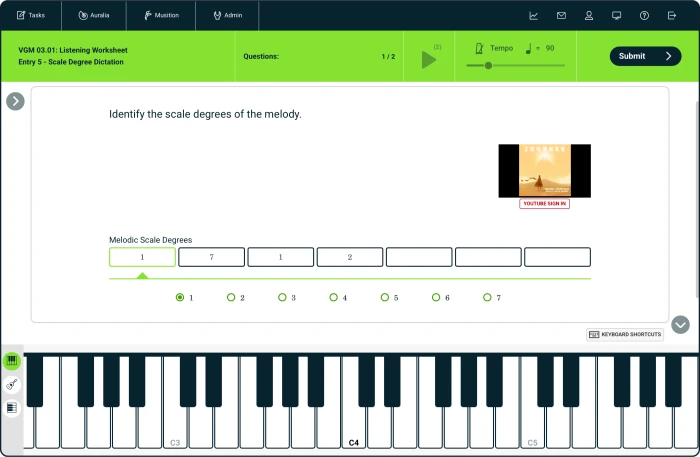
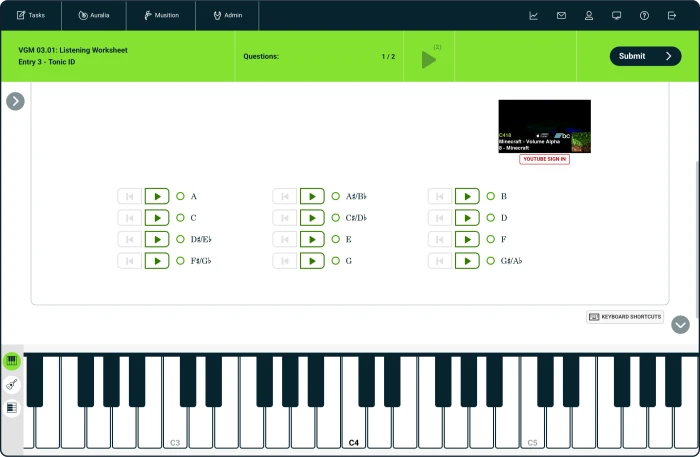
Featuring

  • 11 tracks from 10 games &1 anime including Final Fantasy, Chrono Trigger, Pokémon, Sonic Adventure 2, Halo, Minecraft, Journey, Celeste, & Genshin Impact
  • Works by Yoko Shimomura, Nobuo Uematsu, Austin Wintory, Lena Raine, C418, and others spanning 8‑bit chiptune to modern orchestral scores and pop tunes
  • 200+ ready‑to‑use questions across 11 worksheets including composition and improvisation exercises
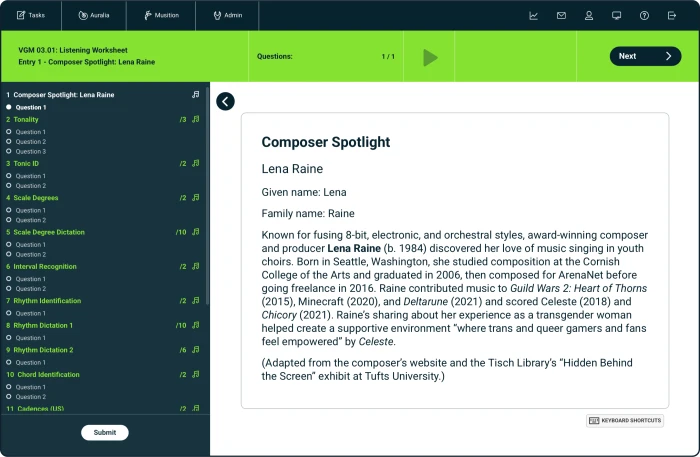
  • Composer spotlights to situate each track historically and culturally

Topics & Questions

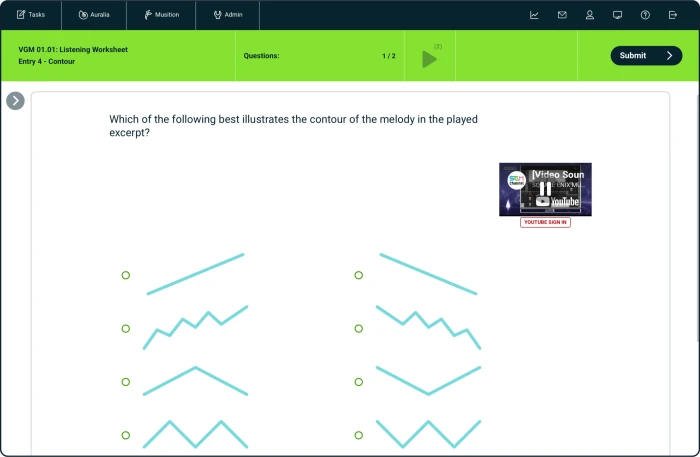
  • Contour
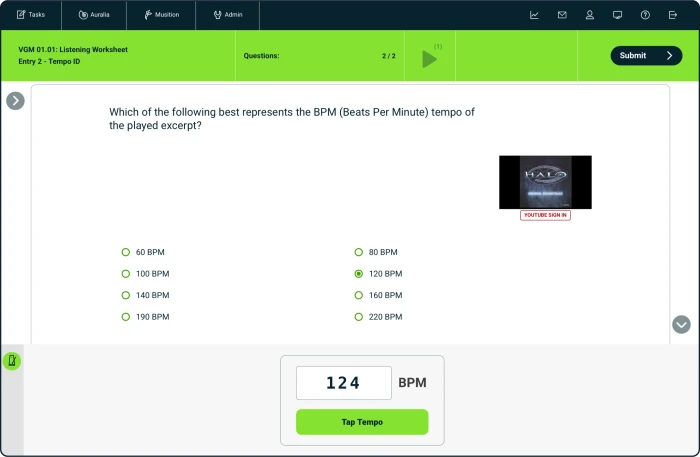
  • Tempo Tapping & ID (BPM)
  • Tempo Matching
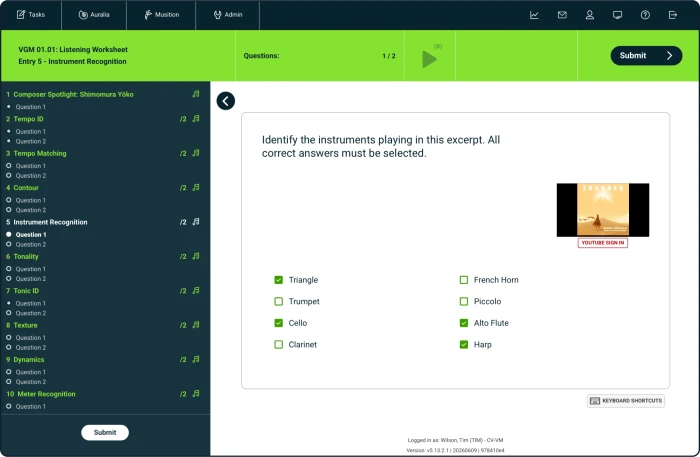
  • Instrument Recognition
  • Tonality
  • Tonic ID
  • Texture
  • Dynamics
  • Instrument Techniques
  • Compositional Devices
  • Scale Degree ID
  • Scale Degree Dictation
  • Rhythm ID
  • Rhythm Dictation
  • Interval Recognition
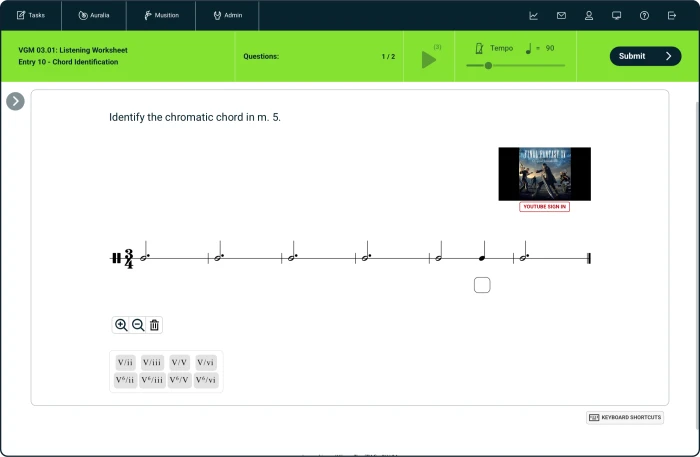
  • Chord ID
  • Cadence ID
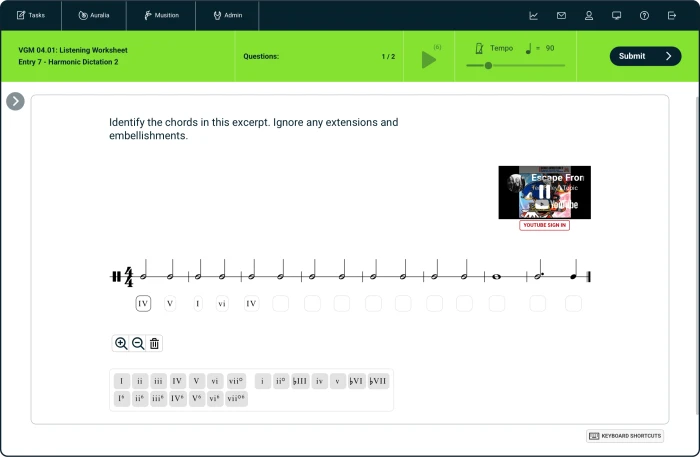
  • Harmonic Dictation
  • Modulation
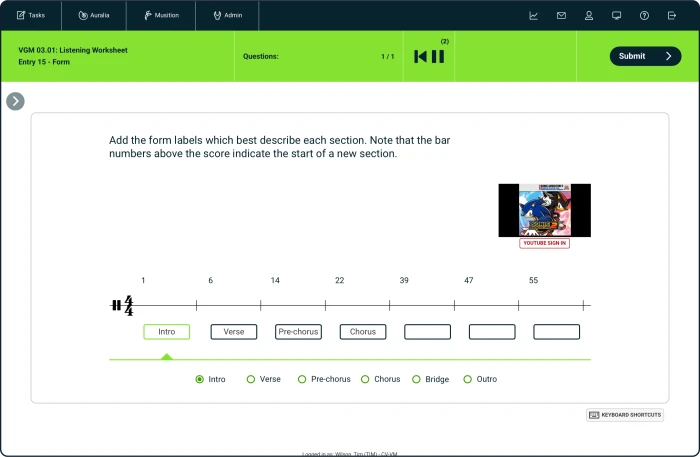
  • Form

Worksheets

LevelFocusContent
1Listening WorksheetCore musicianship concepts including tonality, instrument identification, tempo, tonic ID, density, dynamics and contour that are appropriate for middle school and high school students. This worksheet requires no notation skills or formal music vocabulary.
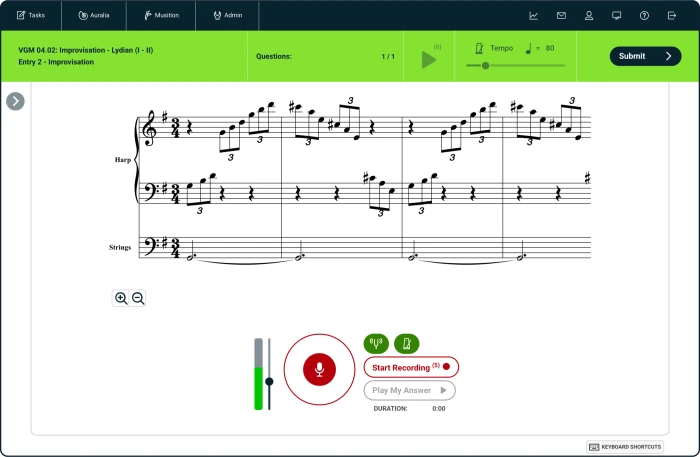
1ImprovisationStudents record themselves improvising over an E minor, video game music inspired accompaniment.
2Listening Worksheet
Core musicianship concepts including tonality, instrument identification, tempo, tonic ID, density, dynamics and contour that are appropriate for high school and 1st year university students. This worksheet requires some notation skills and formal music vocabulary including predominant chords.
2Improvisation
Students record themselves improvising over an E minor, video game music inspired accompaniment.
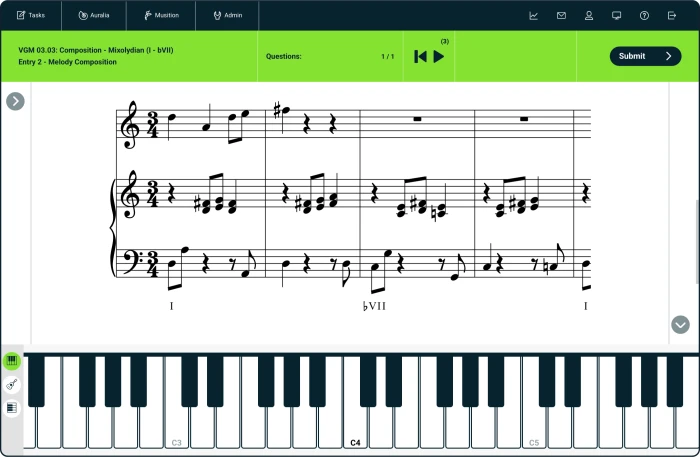
2CompositionStudents compose a melody for a given E minor, video game music inspired accompaniment.
3Listening Worksheet
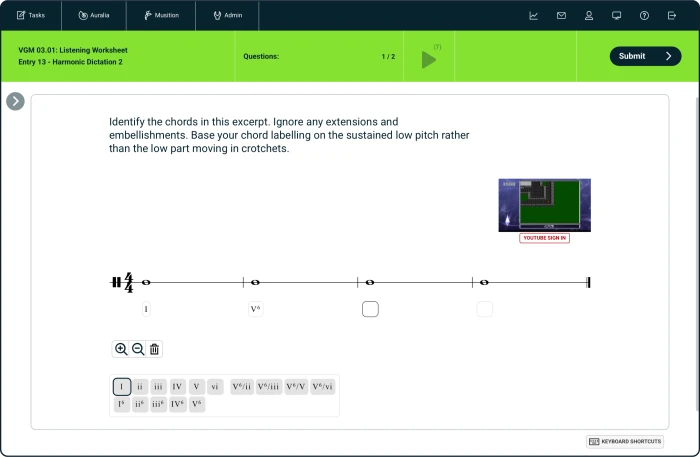
Musicianship concepts including tonality, scale degree ID, interval recognition, cadences, form, rhythm and harmonic dictation that are appropriate for 1st year university students. This worksheet requires notation skills and formal music vocabulary including applied chords.
3Improvisation
Students record themselves improvising over a mixolydian chord loop with a video game music inspired accompaniment.
3Composition
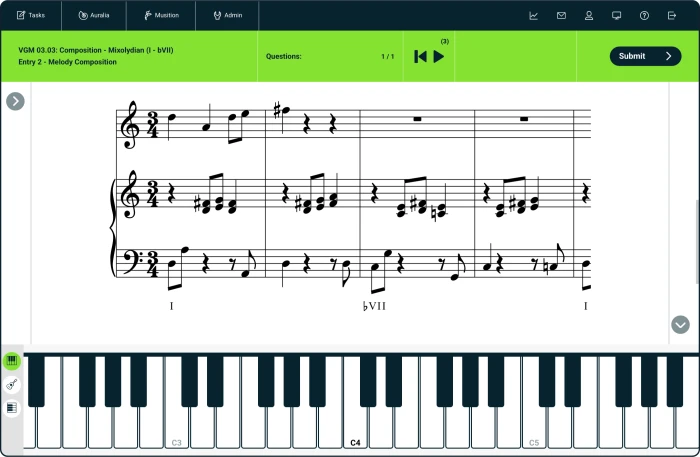
Students compose a melody for a given mixolydian, video game music inspired accompaniment.
4Listening Worksheet
Musicianship concepts including scale degree ID, chromatic chord ID, harmonic dictation and modulation that are appropriate for 1st and 2nd year university students. This worksheet requires notation skills and formal music vocabulary including mixture chords.
4Improvisation
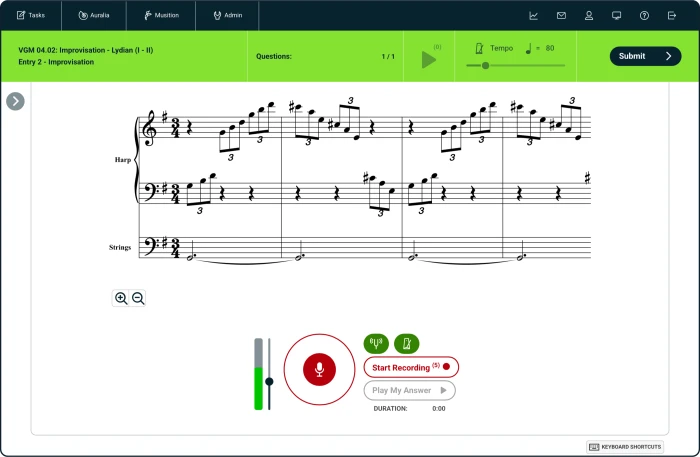
Students record themselves improvising over a lydian chord loop with a video game music inspired accompaniment.
4Composition
Students compose a melody for a given lydian, video game music inspired accompaniment.

Composition & Improvisation

Creative tasks are powerful motivators. Let students improvise and compose directly from the game‑music examples to turn abstract aural and theory concepts into tangible musical choices; melody, mode, and rhythm, become tools they can shape and hear immediately. The Auralia worksheets explicitly include improvisation and composition exercises tied to VGM inspired accompaniments, giving students structured freedom to apply what they know.